Sunday, June 8, 2014

A trip to Kumaon Region of Uttarakhand


May 24 to May 30th 2014


The idea of a week long trip was floated by my father in law Shri GS Bhandari around third week of April, 2014. My sister in law Taru didi wanted a quiet place without any hustle and bustle. And through a quick google search we found Uttarakhand as a perfect place for holiday relaxation. All transportation and hotel arrangements were done in no time.


On 24th May, 2014, the Shatabdi Express from Anand Vihar Railway station to Kathgodom made our journey very comfortable though the seats were scattered for a 10 member family. Finding that majority of the travellers were students, our excitement knew no bounds. It was summer vacation and ideal time for students for tracking and adventure activity.


We reached Kathgodam at around 12 noon and boarded waiting Tempo Traveller for onward journey to Kausani. The temperature was rising so we wanted to reach on higher peaks as early as possible. We crossed Bhimtal, Bhawali and Almorah and finally reached our destination at around 6.30 pm at Himalaya Darshan Resorts, Kausani. Of course we had short breaks for tea and lunch at very serene locations.


Kausani is located 52 km north of Almora. There are very few places in the Himalayas that can compare with the beauty of Kausani - a picturesque hill station famous for its scenic splendor and its spectacular 300 km-wide panoramic view of Himalayan peaks like Trisul, Nanda Devi and Panchchuli. Kausani lies atop a ridge at an altitude of around 1890 m amidst dense pine trees overlooking Someshwar valley on one side and Garur and Baijnath Katyuri valley on the other on Almora-Bageshwar-Didihat Highway. Mahatma Gandhi called this place the 'Switzerland of India', due to similarity in landscape.


We settled down very quickly with the hospitality of the owners Shri Manoj Arora.    The Resort is having a combination of Luxury and Bamboo cottages, quite clean and comfortable. But the atmosphere outside rooms was very fascinating. The grand view of the majestic Himalayas was crystal clear. The Resort itself has been nestled in the lap of deep fruits and other trees. While you are busy in watching the beauty of nature, the birds were singing hymn in your welcome. We played card games in the evening while enjoying the cool weather.

On 25th morning, we got up sharp at 5 am. You should be ready to see the awesome view of the rising Sun. Chirping of the birds will wake you up otherwise you can sleep in peace as long as you wish. You get completely mesmerised when you see glimpses of sun from the behind the Himalayas. A completely mystic atmosphere will take you to the new world.
Nothing can be more enjoyable then playing in divine beauty of nature.  


 Mahendra jijaji, Beenu, Taru Didi and me tried to move around the forest and explore charms of jungle and trees. 


Afternoon was meant for ore exploration and excursion. We went to Bageshwar Town,  a place with lot of historical and archaeological importance having small and big temples. Among them are the Baijnath temple and Bagnath temple; the latter is situated in the middle of the town just across the confluence of Saryu and Gomti. The weather was turning cloudy and become very pleasant. We had lunch in a restaurant and went straight to Sangam (confluence) of three rivers.   Though it was raining, we went to close to river to capture the nature in Camera and play in river. What can be more pleasurable than finding Tea Stall in the midst of farm fields and at the bank of river. Just imagine you are soaked in drizzling in a cool weather and see the pleasure of hot tea and refreshments.

We returned to hotel by 7 pm and after a scrumptious dinner we had sound sleep.

On 27th morning, we had our breakfast and shifted to a new hotel known as Himalaya Study Centre Resort, a beautiful new property created by Shri Threes Kapoor an avid photographer of national repute. We settled down here by 11 am. Of course Big Cars don’t have access to this hotel so you should be ready to walk down to the valley for around 250 meters or wait for a Jeep to take you to the destination.
 
The afternoon was meant for local sightseeing and intermingling with the locals. We went to Gandhi Ashram and saw some of the astonishing Himalaya peaks from there. Anashakti Ashram is a quiet and revered place where Mahatma Gandhi spent some days and wrote his commentary of Anashkti Yog. Pant Museum is another place of importance, this being the place where the famous poet of Hindi literature, Sumitranandan Pant was born. 


On 28th May, we went for tracking to villages surrounding our hotel while crossing small canals and fruits trees and bushes. The innocent villagers were busy in their morning chores, plucking fodders for their animals, cultivation of farm land, plucking vegetables, and so on and so forth. A real India indeed stays in our villages only. We had the most beautiful experience interacting with villagers, went to Tea Garden, took a few snaps and came back by 9 am, a perfect time for breakfast. Surprisingly, though in tough hilly terrain, almost all houses in the village were made of brick and mortar “pucca” houses. The villagers have small needs, but very happy with whatever belonging they have.


The owner of the Resort, Mr. Threes Kapoor takes personal care of each guest and feel very proud to show his Art Galleries which are coming up within the complex of hotel. He has chosen his life mission to promote budding artists and has created enough space for them to show their talent in his hotel cum Art Gallery. 


Now our second round of tracking took place immediately after that. We went for hiking to a temple location known as Rudhradhari temple about 15 kms from our Hotel. While Papa mummy found solace in a small shop cum dhaba at the foothills of mountain, all other members Arpit, Kshitij, Prachi, Sarita bhabhi, Beenu, Taru didi, Mahendra Jijaji and I, set for tracking. Rudradhari Falls and Caves in Kasauni are located at a place with terraced fields, lush green paddy fields and dense green pine forests. The Rudhadhari falls is a natural attraction here and many ancient caves are explored nearby areas.

Our evening was full fun games like Dumb Sherar in Hotel. The hotel lobby was having brilliant wi fi signal so one can see almost all of us busy texting messages and photos to friends and relatives post dinner. 


We had early breakfast on 29th May, 2014 at Cafetaria of the Hotel and set for Ranikhet, a beautiful hill station  cum Army Cantonment about 50 km away from Kausani. The Hotel West View, a heritage hotel was waiting for our welcome. We reached there by 1.30 pm and by 2 pm we all settled in our respective room. The Hotel dates back to charms of twenties with architecture of English time, wooden flooring, big rooms, big bath rooms and big lobby. Sometimes you are in illusion to decide whether you are in India or in Europe.  The hotel was beautifully decorated with multi coloured hanging flower pots and artificial birds much envious to the real birds.

Ranikhet is a hill station and cantonment town in Almora district. It is the home for the Military Hospital, Kumaon Regiment(KRC) and Naga Regiment and is maintained by the Indian Army.

Ranikhet is at an altitude of 1869 metres above sea level and within sight of the western peaks of the Himalalays.

Evening was meant for local sightseeing. We went to Golf Course, Ram temple and Hotel Windsor Palace. The other note worthy places are Jhula Devi temple and Army museum which has a wide collection ranging from stories of the heroics of the First World War till date.


The next day 29th was meant for a trip to Apple Orchards known as Chaubatia Gardens, a huge area spread over more than 500 acres being maintained by Local Administration. Though named as Apple Orchard you can see almost all kind of fruits here, apricots, peaches, plums, almond and of course apples. The noteworthy part of this jungle cum orchard was that there were different fruits like apricot and almond on same tree. We took opportunity to buy a few kgs of fruits to give a new taste to our tongue. Evening was meant for lot of fun games.


On 30th we started early for Sattall (Seven lakes), a picturesque place with interconnected group of seven freshwater lakes situated in the Lower Himalayan Range near Bhimtal, a town of the Nainital district.    The lakes sit at an altitude of 1370 metres below lush orchards in the Mehragaon valley. Set amongst dense forests of oak and pine trees, Sattal is one of the few unspoiled and unpolluted freshwater biomes in India. These lakes are a paradise for migratory birds. We had privileges of pedal boating while some members simply chose to appreciate beauty of surroundings.  Lemon water drinks was our favourite drink here.


We had lunch at a South Indian Restaurant at Kathgodam and bade goodbye to Uttarakhand and boarded Shatabadi Express for Delhi  at 4 pm.

We all thanked Mummy Papa for encouraging and guiding us.


Anybody interested to visit these sites, yes, I am there to help.

Thanks and Jai hind.

PS  :  Just to mentioned that 26th May 2014 was special one when all members glued on TV to see new government of India into formation.  What a splendour ceremony was it!!!  We felt proud on our mature democracy and everybody had moist eyes with ecstasy to see galaxy of world leaders giving tribute to our great nation.


Sunday, August 18, 2013

Independence Day, 15th August, 2013 : My Speech


Dear Brothers,

I congratulate you on 67th Anniversary of Independence of our great country India. 

For us this is very special, pious and great day.   We enjoy freedom of expression,  freedom of work, freedom of career.  We sing the way we want, there is no restrictions, no inferiority complex.  We always boast the self pride, self-confidence, the joy of celebration of Holi or Diwali or the pleasure of Eid or Christmas or Baishaki as a free  nation.  The great patriotic leaders like Subhash Chandra Bose, Chandra Shekhar Ajazad, Shahid Bhagat Singh, Sukhdev, Veer Savarkar, Mahatama Gandhi, Sardar Patel, Nehruji and so many other known and unknown  warriors sacrificed their life to see the light of the day.  Perhaps we might not be able to understand its importance today because we born after Independence, but ask a country like Tibet how suffocating is to remain a country without freedom of its own. 

We have done remarkable progress in these 67 years after independence.  We built  big dams, big highways, created nuclear bomb,  run big factories, opened new technical colleges, put latest satellite into orbit, created largest network of railways in the world.  Our doctors, scientists, engineers, professionals went to every part of the wold and made the nation proud with their achievement.    Recently we launched INS Vikrant a defence aircraft carrier which raised hackles of the hostile countries. 

But is it enough?  Should we be contended with the progress we have achieved so far?   Or we need to do something more?

Our country is plagued with so many disease that we need to cure them.  In the name of religion or cast we will fight immediately. We shirk the responsibility in office work.  The Indiscipline, corruption and lack of character is eating away the very foundation of the nation like pests.  For past few years, our media is dominantly occupied by the stories of corruption like 2G Scams, Coal Blocks, Common Wealth Games, defence deals, land allotment and so on and so forth.  There is hardly any place for positive and constructive news.  There is somewhere something is lacking.  The enemies of the nation are bent upon creating trouble in  our country.   On pious occasion of Eid in Jammu some anti-social elements raised anti country slogans which disturbed the peace of the country.      We might have difference of opinions, but this does not give you permit to indulgence in violence, burn the nation’s properties, and damage the shops and houses of other faiths. 

This is matter of shame.  This is matter of great concern.  We have to fill up this gap.    We cannot tolerate such intolerances.  Nobody is above supremacy of nation.
China is bent upon incursion in our Leh Ladhak area, Pakistan is free to enter our country and kill our soldiers.  Are we so meek and weak that we can’t rebuke these rogue nations in the fittest way?
We have to think over these.  We have to remain united at any cost.  We have to live a simple but great life.  We have to teach our children the importance of honesty and uprightness.  We have to give example by our conduct.  We should be brave and our children should learn to remain brave.
At least those who are present here can pledge today that we shall never compromise on our integrity.  We shall play our role dutifully.  Nation does not require more than this.

Jain Hind. 

 Pradeep kumbhat


Sunday, May 19, 2013

BAIJI, MY MOTHER


Baiji, My mother (1933  to 2013)


My mother (Baiji) had her last breath on 1st May, 2013 after prolonged illness of around 2.5 years at the age of 80 in Ahmedabad.
She was known as Indira mata in the family.   She was the last surviving member of my Nana’s family who had  four sons and two daugthers.    Nanasa came from a modest family of Koselov, a village in Pali district of Rajasthan  and later shifted to Pune for auto business.
Baiji married in the year 1949 and was blessed with six sons and three daughters.  Baosa my father was a revenue official in Rajasthan and had a transferable job.  Initially she also shifted from one place to another place like Barmer, Dhorimana, Siwana, Rakhi and so on, but finally settled in Mokalsar, a village in Barmer district of Rajsthan way back in the year 1958.  Mokalsar was a small village  but fairly well connected with Rail and road transport.  It  had good education and medical facilities too.     
Baiji had courage of raising nine siblings.   In  Mokalsar initially we had fairly big house made of kacchi bricks and Khepadas (eathern cover over ceiling), metal sheets and big shelter for cows.  Baiji would get up in the early morning preparing food for cows, milching  them and washing Togdas (calves of cows).   There was no water supply in the houses at that time, therefore, water had to be brought in Matkis (eathern pos) from Pechka (Water Distribution Centre).  My mother along with my sisters and other village ladies would go to Pechkas in very colourful traditional attire, wait for their turn and bring water in Matkis.  Minimum 10 to 15 matkis  had to be brought to fulfill the need of entire family.  Pechka was about one km away from our house.  Normally male members used to go to common places like Pechka or Abotia ki beri or Behtalab or Mamaji ka Than for bathing and washing cloths.  In those days we had habit of taking some refreshment at around 4 pm alongwith tea.  I remember a incident when one fine afternoon when baiji and I were taking tea in Basali (front area before kitchen) a monkey entered house, snatched all chaptatis and cup of tea and went up to the Neem tree which was there in the mid of my house and enjoyed Kaleva (afternoon refreshment)   Immediately baiji managed a few chapattis for me.  

The water problem was solved in the year 1972 when regular water supply through government tapes was installed.  At that time also we shifted to “Sagar Niwas” a big pucca house near Jain temple. 

Baiji and Tara bai were very close friends.  No day will go without meeting Tara bai.  They  will go to each other’s house every day and will enjoy tea in Talis (deep bowl).  I have seen on many occasions both friends fighting like birds but after a few minutes both will be together having sip of tea.  Both of them spent more than 30 years together and ultimately Tara bai went to heavenly abode in the year 1985.  Guruji, her husband shifted his base to Osia after her demise and stayed there till last moment of his life. 
All my brothers and sisters got education up to secondary level in Mokalsar and then went to Jodhpur for higher education and career.  Baiji chose to stay back to Mokalsar as one of my sisters though married in Jodhpur was teacher in Mokalsar and she had small kids to be take care of.  Many years later when all the brothers got married, baiji shifted her main base to Jodhpur.  Many people say that baiji was reluctant to come to Jodhpur because she was not prepared to take up responsibility of grown up children.  Strange it might sound…but surely she spent her early days in very hardships  for raising nine her own children and three kids of her daughter and she surely deserved some rest.  But whenever she visited Jodhpur, the command was in her control only, though she was quite liberal.

In Mokalsar we were formally inducted into Oswal Panchyat in the year 1976 and became eligible for “Hanti” (all common gifts and presents)  distributed to the communities on the occasions of marriage or special religious festivals.  Mostly gifts were in the nature of stainless steel utensils.  Baiji had special likings for them.  Baiji  had  a whole lot of collection of utensils of different shapes and sizes.  She was purchasing them otherwise also from other families from her meagre savings. 

My sisters were employed in government schools as teachers immediately after passing their higher secondary schools as they were the highest educated women in the village at that time and the appointment letters directly came from Panchayat.  This was great support to family.  Though my elder brother was already shouldering this responsibility as he started working from childhood itself a manager to a PDS shop.    But baiji ensured that whatever difficult phase  might be, the kids do not suffer.  So she didn’t mind borrowing money from  local money lenders even at 2 to 3 percent per month of interest.  
Baosa had very high on temperament and very bold voice.  Nobody could dare to face him whenever he was angry.  Baiji  would listen to him patiently and cool him down.

Baiji was very good cook.  It was a great pleasure to eat some of the special preparations of baiji particularly gate ki sabji, pittod, basania, bhindi, loki – dal,  kakdi ki sabji and gur ka seera.  Winter was always cherished with methi ke laddu.  I am very fond of methi ke laddu and now Beenu, my wife takes care of it…of course, the flavor of baiji is missing.

My eldest brother and bhabhi, though took most of the financial responsibilities for marriage of brothers and sisters, baiji ensured that family remain united.  It is proud moment for family that we all 40 members of the family meet practically every year. 

Baiji had special liking for folk dance and music.  She would love to see her daughters in law particularly Beenu and granddaughter in law Anju dancing on folk music. 

Though she was a little conservative on costume of daughters in law.  She wanted them to look like “bahu” and not “beti” ..so she wanted them to wear Saris.  But later years she allowed Beenu to wear cloths of her choice and all other bahus followed her.

Till the age of 76 she was hale and hearty.  She was staying alone in the house of 12th road and enjoyed  her independence.  But old age coupled with high diabetes  she fell ill and became bed ridden.  During her illness she kept on shifting from Subhas nagar Jodhpur – Ahmdabad-Chandigarh.  Finally ill health didn’t allow more movement.  In Jodhpur, we salute, Induji and Charmi my bhabhi and niece who toiled day and night to make her comfortable when she was ill.

She was being treated in Ahmedabad from July 2013 and taken care by Bhai sab and Babhiji.  Despite so much care, she was victim of bed shores and they took toll of her.  Last three months of her life were extremely difficult, painful and merciless. 

While many parents pray for birth of daughters in their homes because daughters are more attached with parents, baiji must be praying that her sons gets daughters in law like Induji and Chanduji who abdicated their personal pleasure in service of father in law and mother in law. 


Friday, November 2, 2012

Trk Family Meet at Ostra


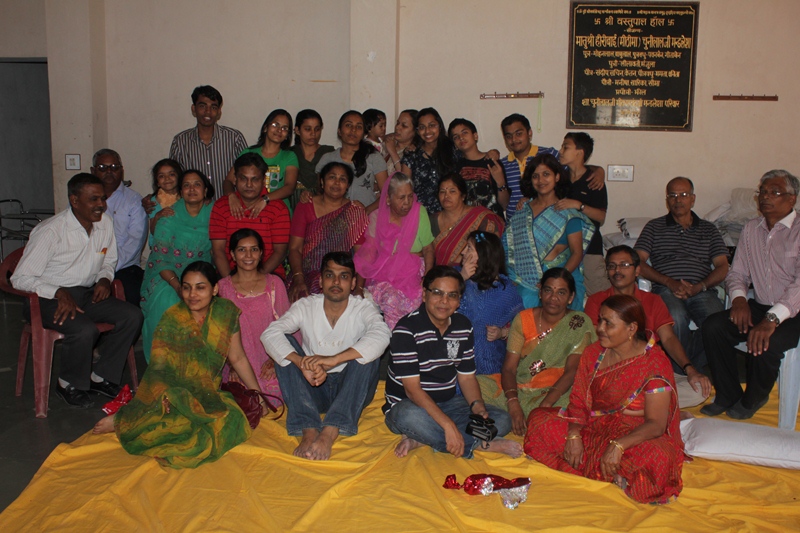
The 8th Trk Family Meet was held at Ostra, a tiny village around 80 km from Jodhpur city from 21st October 2012 to 23rd October 2012.  The venue was selected at a Jain temple site that is nestled in the lap of foothills.


It was great feeling to reach at the secluded place blessed with abundant nature bounties.  Fresh and clean air, sweet water, neat and hygiene food and above all smiling villagers chanting bhajans at Ma Sachaiya’s temple at the top of hills were refreshing.  The white marbled temple with its beauty and peaceful atmosphere had given special solace and energy to us.  The lodging and boarding arrangement were at the Guest House of temple which was fully equipped with all amenities  and well appointed rooms and a big hall for organizing cultural events. 

Venue was selected near Jodhpur keeping in consideration limitation of movement by Baiji and Ashok.

The meet programme was organized at the behest of Niranjan Mohnot duly supported by Induji and Beenu.  Their uninstinted  efforts made it sure that everybody come and participate.  We were 36 members present at venue out of 47. 


Her Leadership Mrs Vineeta Kumbhat had circulated minute details of the each programme well in advance.   She also talked to each and every member of the family personally and encouraged them to participate.

On 21st October, programme was started with homage to Baosa and honoring to meritorious students in the family.  The medals were given away to  Akshya,Payal and Chinki who triumphed in the professional examinations. Charmi was also honoured with medal for scoring 100% in 10th Board.  Then we had series of different events. 

Presentation by kids:  Multilple topics were on agenda for presentation : My prospective bridegroom; If I were a girl and My dreams.  Arpit came out with a beautiful theme, “If I were a girl” on audio video presentation and judges obliged him with first prize.  Dimple was cheered by crowd and she bagged 2nd prize for her humorous presentation on “My prospective bridgegroom”.

Many games were played in the afternoon session on 21st by Chandu bhabhiji, Induji and evening was meant for outdoor games and Arti and Bhajans in temple.  Late evening was followed by Dandiya and competition of popular film songs.  At 12 midnight we all retired for rest.  However, some of us went to temple site on hill where “Rati Joga” was in progress.  Neeru was privileged to sing alongwith local ragis with his bhajan..”ranucha ra raja….”

The 22nd was designed for the whole day programme.  A  lively debate on contemporary topics like The Merits  and demerits of Face Book, Watching cricket is a waste of time, Junk Food Vs Regular food, Organised day routine Vs unregulated routine, Live in relationship Vs marriage, Bahu should be treated as Bahu or daughter. Renu-Raju,  Niranjan and Arpit as a group were adjudged as best debators.    This was followed by another interesting game of Quiz by Beenu.  Ashok/Chinkiand Prasan/Sumit  bagged the  prizes. 

Mimicry organized by Beenu was participated wholeheartedly by one and all.  Chinki and Chinku done wonderful job by copying habits of their father and mother respectively. 

Evening was meant for bhajans and dance competition.  As usual, both kids and elders took participated in the events.  Finally Arpit and Kshitij were chosen best couple dancer as they performed on Punjabi Rap.  And as usual Nupur stole the show with her unassuming performance.  All attitude and intellectual games were won by ladies of the family viz Renu, Anju,Sunitaji.    Late evening after 11 pm was reserved for gossiping.

Numerous games were also played among them special Housie on family nicknames by Ashaji and Chnki, the games of proverbs and cinema names by Induji

23rd October was the concluding day.  The presentation ceremony was honoured by Bhai sab and Jijaji Grodhan sa.  All winners were awarded with prizes, as a gesture of affection.  While appreciating the efforts of youngsters and ladies of the family, Bhai sab expressed happiness on participation of each and every member of the family.  Her leadership Mrs. Beenu kumbhat also thanked to all for coming all the way from different locations and participating in all events.  With the resolution of house the responsibility of organizing next family event was passed on to Chinki our own Nupur.  Anuranjan wanted more creative ideas and something different in performance particularly in cultural events.  He has promised he would come out some very excellent idea in next meet. 


The most important feature of this programme was that all Bahus of family played very active role in all events.  The mimicry by Shilpi was just excellent, Priya also obliged the crowd.  And children enjoyed the most by playing in sand.  The joy of Rishu, Adi and Akshi was the star of attraction. 

In category of 1 to 5 years, our kids Nandini and Adi in Dance and singing sequel, Akshi, Adi, Rishabh and Nandni, in Dandia enthralled the crowd. 

Neel Kamal and Chandu bhabhiji were in full traditional costume in Dandia and ideally won the best dressed participants.


Sunitaji and Renu in Mind twister, Renu and Anju in Mobile character, Kshitij and Renu in Card Game, Chinki, Shilpi, Kartik and Arpit in Fancy Dress, Chinki and Anju in Song quiz, Kaku and Anju in letter filling made their strong presence felt. 


Our great musician and singer Kartik made our evenings very soulful and melodious with his Synthesizer and sweet voice. His gazal “Chithi na Sandesh……” made the crowd jittery.  Beenu and many audience could not stop their eyes being mist.   Chinki our own Lata Mangeshkar made the crowd emotional with her gazal ….”Aaj Jane ki jid no karo….”.  Ideally both were chosen as the best singers.

As usual Raju and his whole family entertained the audience with his trade mark group dance and copying Bhabhiji and Jain sab.  Kshitij with his mummy and papa enchanted the spectators with his prop dance.  Our Anju made the family immerse in the meditation with her early morning yoga session and she herself lost in deep meditation when danced on Rajasthani songs.  The parody of the singer presented by Beenu Pradeep was also appreciated by the crowd.

My spontaneous dance on “….Kesario hajari gal ro phul…..made Kamala baisa so energetic that she got up and started dancing like a 20 year old girl.

It was really a very wonderful experience seeing all cousins and kids enjoying together and sharing common platform for a better tomorrow.

The special thanks and appreciation was given to Induji for taking all troubles for organizing events at Ostra. 


Sunday, September 23, 2012

Mokalsar Days


It is said that a person always tend to remember his childhood.  There is great impact on rest of his life for whatever he learns during  growing age whether through formal education, extra murals and experience, rightly known as formative years.

Baosa, my father  was posted in Barmer district, therefore, he preferred to settle in Mokalsar, a village with facilities of good housing, abundant drinking water, schooling and government medical facilities. 

Ramdan Hundia Govt Primary school was my alma mater.  My sister Kamla was teacher who  got me enrolled to school. 

We had a big house with open space.  In those days there were typical names of parts of house like Ora (room), Saal (hall), Basali (front room), Bada (space where cows were kept), Rasoda (kitchen), Malia (First floor) and so on. 

In 1987 I happened to go to Lunavala and Khandala from Mumbai after my training at GTC, Mumbai.  I saw a great rush of public  enjoying water splashing, natural fountain, falls, water canals and mountains.  The 90% of the crowd was from Mumbai and they all were cheering the beauty of nature.  Though it was really a nice site, but then I realized how I had been lucky.  For  urbanites these beautiful scenes are only for the purpose of excursion once in a blue moon, but for us this was a routine in Mokalsar, particularly in rainy and winter season.  The whole village is resting in the lap of high hills known as Chhapan ka Pahad.  The hills have various layers.  Between two hills there are natural valleys. The streams of water coming from up hills become fast flowing canals.  It looks like the various branches of family coming together at single point and they flow jointly. 

 The village was blessed with many such places known as Mamaji ka Than (Place were local deity Mamji were worshipped), Beh Talab (Running lake), Abotio ki Beri (The Sacred Pond), Chopla (small lake with entry from four sides).

 Mamaji ka Than had multiple small ponds with crystal clear running water.  It was great fun to come there after climbing a hill  for about one hour or so.      Behtalab was again a great fun during monsoon.  There were great falls and number of small ponds and lakes  forming out of gushing water coming from a radiant gravitational force.  Almost all kids and elders alike used to enjoy such bounty  of nature.  There was no restriction either by parents  or anybody, so it was free affair at any time. 

The complete inhabitation of the village was based on caste and religious lines.  Therefore, you can easily be  identified where you are staying.  There used to Chhota Rawla (small thakurs), Bada Rawala (Big Thakurs), Brahmno ki gali, Kumahro ka bas, Lunkaro ka bas, Pani ki seri and so on.  Gori Pipli used to be the main Bus Stand where a huge Peepal tree gave  cover to the passengers and vendors alike.   The oswal community was very rich and they had magnanimously donated for the welfare of society.  Hundia family had done great service to community by building primary, higher secondary schools.  They also constructed hospital, hostals and done  many more philanthropic activities.   The architecture of the Jain temple is similar to that of Dilwara  temples. 


During our time there used to be three schools one middle school for girls, one primary school for boys and one secondary school for both boys and girls.  Mostly classes were regular.  Lot of focus was on physical activities.  Every day parade and exercise on drum beating for around  one hour  was compulsory.  Independence Day and Republic Day functions had special significance.  Rehearsals for cultural events and ground cleaning used to take place at least 15 days in advance.  We used to wait for the day.  Shri Dau Lalji Sharma, our head master was full of energy and he had command our English language.  He started mock tests and pre board examinations to ensure better results for metric students.  The sole credit goes to him for making school results 100%.  Our soul will always thank him for making school a very sacred place.  During recess time, he would play Bhajans of great singer Pradeep on loud speakers  that had imbibed great musical values in us. 

Like any other village, Mokalsar is also  vibrant and a colourful village that not only leaves fondest memories but is also infectious. The culture of this village is well known for its ethnicity and vividness.

Fairs & Festivals of Siwana Tehsil creates a sense of colour that covers the entire place adding to its beauty. The preparations for festivals, big or small are always elaborate. Every festival would have religious and mythological, seasonal or historical significance. Different fairs are associated with different reasons such as fairs with religious importance or associated with changing seasons to welcome monsoons or spring or something else, reason may be any each fair is celebrated in joyous spirit. The Fair of  Chamunda Temple in midst of hills was of special significance.  To see Bhopa (person who encompass   deity in his soul) and solving problem of village folks had special effects on our mind. 

Folk Dance & Music of Mokalsar  are graceful and energetic forms, which reflect vigour and dynamism. The expressions, spontaneity, exotic & bright coloured attires are all part of Rajasthani styles of dances. Some of the popular dance form performed here are Ghoomar, Holi,  Kacchi Ghodi and Ger. It is not just an art form that exists for entertainment or as an expression of creativity it is also a source of livelihood. The musicians create a soulful melody with its various instruments such as sarangi, kamaycha, dholak, harmonium, matkas, etc.  Bheels  used to play special mouth organs.  Though I was very young, but it was special pleasure to enjoy the whole night “Rati Joga” or “Jagran” when local folk musicians used to lift the whole atmosphere to new height of spirituality.  I still remember the eulogizing  Ganesh with the starting prayer..*The mare ghar me aaijo re….*

Though anybody would long to live in such beautiful environment, but my destiny had something else in my account.  So left village in June 1979.


Foreign Direct Investment


Government has cleared the proposal for FDI upto 51% state in direct retail trade in India.  This will pave way for big International retail chain like Wal Mart, Tesco, Carrefour, Metro etc to open their shop in India. This opening has come with certain riders like minimum sourcing of 30% of their merchandising from small and medium industries, presence only in cities exceeding population of one million and Sates are free to allow or not to allow their presence.

There has been big hue and cry on this decision.  Principle opposition party BJP, its friends and some of the government allies are opposing this move from tooth and nail and  observed Bharat Bandh on 20th September 2012 in protest. 

There is apprehension that with entry of multinational in retail trade, about 5 crore small traders will be rendered redundant and this will give rise to unemployment.  They also contend that it is anti farmer and as such anti India. 

We have seen the rule of BJP during 1999-2004 period and noticed that as far as economic policy of then government is concerned, they were similar to that of congress.   The only difference of ideology is that Congress does the politics of “secular” character and BJP is seen as pro Hindu.  But their move to oppose FDI is only a opposition for its sake or I would say it is populist move alongwith Mamta, SP,CPM and their brethren who came together to show their solidarity otherwise always fight like street kids.

Now let us examine whether FDI will harm the interest of small trader community.   Such fears were raised earlier also when domestic player Reliance announced its foray into retail trade in the year 2005. There was big vandalism in some parts of the country.  Reliance stores were ransacked by mob.  However, Reliance went ahead and opened its stores.  Now see the change.  Reliance and Big Bazar   brought the technology, gave experience to the consumer of  modern retail.  It gave freedom to the consumer to enjoy the best  quality product at the most completive price.  So effect?  The neighborhood traders or “mom and pop” stores learnt the tricks of the trade.  They overhauled their stores, they also introduced technology, made their store more clean, more hygienic, better equipped and ultimately who is the gainer?  Both trader as well as consumer!!

There were big doubts  and protest when KFC came to India.  Today we have large international chains like KFC, Mc Donald, Pizza hut in food business in nook and corner of India.   But with their advent, did we do away with our traditional dishes, Idli Sambhar, Vada, Aloo Bhaji, Samosa, Dhokla?  The only difference which brought in the country that our eating joints have become more modern and competitive.

Now the let us see the fear of losing business of small traders who are typically our neighbor hood stores.   Though there may be some realignment of retail practice by small traders, but theory of  losing business as such is ill founded.  World over the big retail chains like Wal- Mart, Tesco, Carrefour, Metro etc have very big sized stores with size ranging from 30,000 sqft to 2,00,000 sqft.  In India it is next to impossible to find such huge space in the high street because of skyrocketing real estate prices.  It will be totally unviable enterprise for them to be in the heart of city.  Therefore, the next best course of action will be to find suitable space in the outskirt of city or at the best in the lower ground floor of the huge shopping complex.  Our kirana store have the advantage of proximity to consumer,  credit facility, personalized services like home delivery, rate bargaining  etc which will be typically missing at large stores.  Certain countries like China, Malaysia,  Russia, Thailand, Indonesia, Phillipines, etc have allowed 100% FDI in retail business, but their local business channels are still thriving.

By not allowing multinational companies to operate from our country, we only thwart our consumer to get best of  deals.  Consumer is benefited by way of getting best of international products at the most competitive prices.  Our farmer will be richly benefited because there will huge demand of his produce by these stores.  Today more than 30% of our farm produce wasted because of lack of proper storage  and supply chain facility.  FDI will strengthened supply chain management.  Farm produce will be better produced, better stored and ultimately both the consumer and farmer will be gainer.  In India, we have tremendous problem of adulteration in food items like pulses, spices, edible oils, etc.  These items are mostly supplied to consumers directly through unorganized small retail stores.  The small stores, will be able to source their merchandise through these  big stores who have strict quality control system.  Thus there will be serious blow to unscrupulous middleman/trader.  A rough estimate suggest that there will surge of around 10 million new jobs after arrival of FDI in India.  Further government  Policy mandates a minimum investment of $100 million with at least half the amount to be invested in back-end infrastructure, including cold chains, refrigeration, transportation, packing, sorting and processing. This is expected to considerably reduce post-harvest losses.

There is another point of view of some quarter.  They say that East India Company entered India for trade during Moghul  rule  and they governed us for 200 years.  This analogy has  got no sound footing.  When East India entered India, Moghul empire was at this nadir of shattering.  There was no concept like unified India.  There were princely states, they had their own currencies and sovereignty and most of the time they were fighting to each other to establish their superiority.  * A strong legal framework in the form of the Competition Commission is available to deal with any anti-competitive practices, including predatory pricing.  We have recently seen the changes in Income Tax laws whereby Vodafone was not allowed to go scot free despite judgement from Supreme Court.  Therefore, any attempt to wipe out local business will not go well with the our stringent regulatory framework. 
Just imagine Can Coasta Coffee or Starbucks  give fight to our own CafĂ© Coffee Day.  More such our own store will come up.  We need not worry.


    <data:blog.pageTitle/>


Thursday, August 2, 2012

Arranged Marriage or Love Marriage


The debate of arranged marriage and love marriage is not new in India.  Both concepts have their own merits and demerits.

 Arranged Marriage:  In arranged marriage normally parents scouts for the probable candidates for bride or bridegrooms.  With active consent of their son/daughter parents usually fix up matrimonial proposal.  In India, this practice is mostly common.  As a tradition, it is assumed that when the girl enters new home, she automatically becomes member of the new family and her acceptance in the family becomes more strong.  Love and emotions take back seat.  But with the passes time, the strong bonding take place between husband and wife and their offspring become the source of their inspiration.  In this way they tend to remain as a happy family.


However, the strong negative point about this system is that there might never be actual love between boy and girl.   Still they  live together because of the social compulsion.  Love might not be there because their differences in thoughts, different social backgrounds, different economic status of the family and so and so forth.  Therefore, there is risk of unhappy family or breaking of the marriage.


Love Marriage:  In Love marriage, normally boys and girls know each other for a fairly long time.  They understand each other habits, thoughts, cultural values and family back ground.  The element of marriage takes place only when they feel that their relationship or courtship should result into marriage.     It is therefore expected that this will be a serious relationship.  They will have strong love and bonding for each other.  There will be more respect for each other.  More free space and less possessiveness will be the order of the day.
 

But many a times, we have seen love marriages in India proved to be a disaster. The “made for each other” tag vanishes as soon as they enter into a family life and they start realizing the difficulties of practical life.  The girl is not able to accommodates when the boy gives time to his parents, share his income with them, giving importance to his own brothers and sisters or rationalizing his own expenses on wife for which he was unmindful till marriage.  Perhaps we may call this as marriage as the result of   infatuation   and not love.

 The moot question is which method is better?  I think both systems are equally good.  We have to adopt both the ways in the present context.  In case of arranged marriage also both the boys and girls should get enough opportunity to interact so that they can understand each other.  It is rightly said “MARRY IN HASTE AND REPENT AT LEISURE”.   Parents still think that if the boys and girls meet quite often before marriage then it may prove negative and their engagement might not last.  But I think this is not correct approach.  Let them share their ideas about  post marriage family life. Let them develop a good bonding for better tomorrow. 

 Love may not always accidently happen and therefore, somewhere need for Arranged Marriage will always be there.